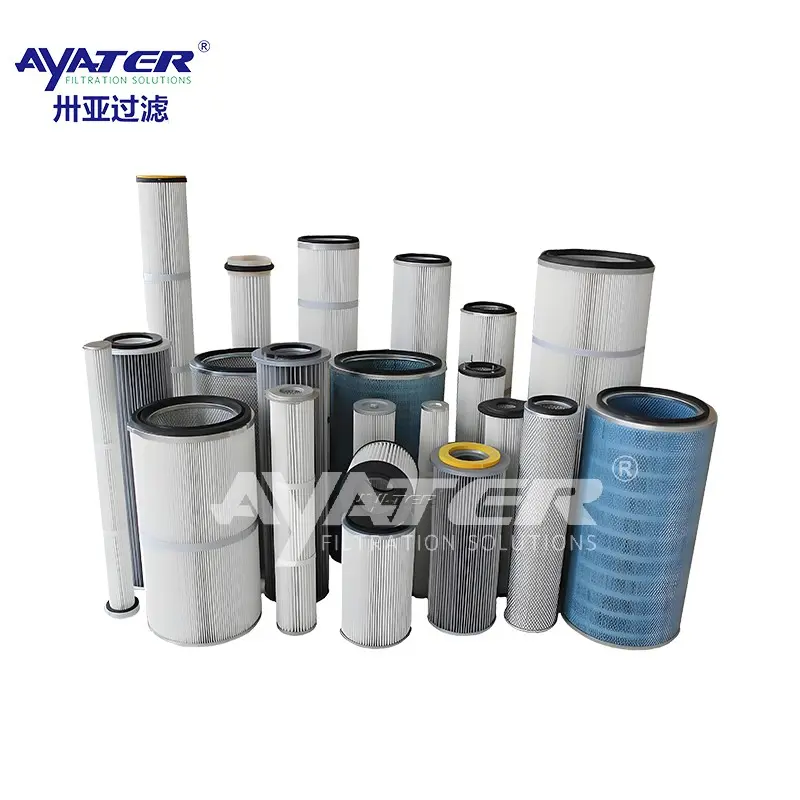
A dust collector filter cartridge is a replaceable filtration element designed to capture airborne particles from industrial exhaust or process air. It typically consists of pleated filter media supported by an inner core, an outer protective structure, or both, depending on the design.
The pleated structure increases the available filtration area within the cartridge. In many industrial systems, dust accumulates on the media surface and is removed through pulse-jet cleaning using compressed air. The released dust falls into a collection hopper for subsequent handling.
Metal grinding, polishing, and machining dust collection.
Welding fume extraction when the collector and media are suitable for the fume characteristics.
Laser cutting and plasma cutting dust collection, subject to process-specific requirements.
Powder handling and dry material processing.
Sandblasting and surface preparation, where the collector design and media can accommodate the abrasive dust.
Industrial manufacturing processes that generate dry particulate matter.
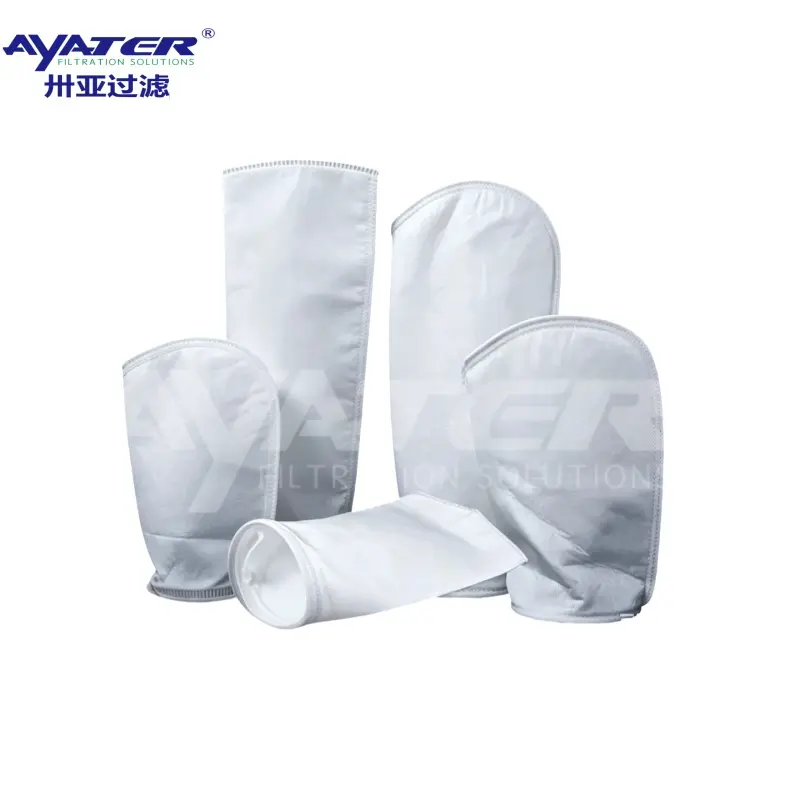
A dust collector filter bag is a fabric filtration element, generally manufactured in a tubular shape, that captures particulate matter from a dust-laden gas stream. Multiple bags are installed inside a baghouse or fabric filter collector.
During operation, dust is retained on or within the fabric. As the dust layer develops, it contributes to particle collection but also increases resistance to airflow. The collector therefore uses a cleaning mechanism to remove accumulated dust and maintain the required operating conditions.
Filter bags are used in many industrial dust collection applications such as:
Cement processing
Mineral handling
Metal processing
Foundriesand other manufacturing operations.
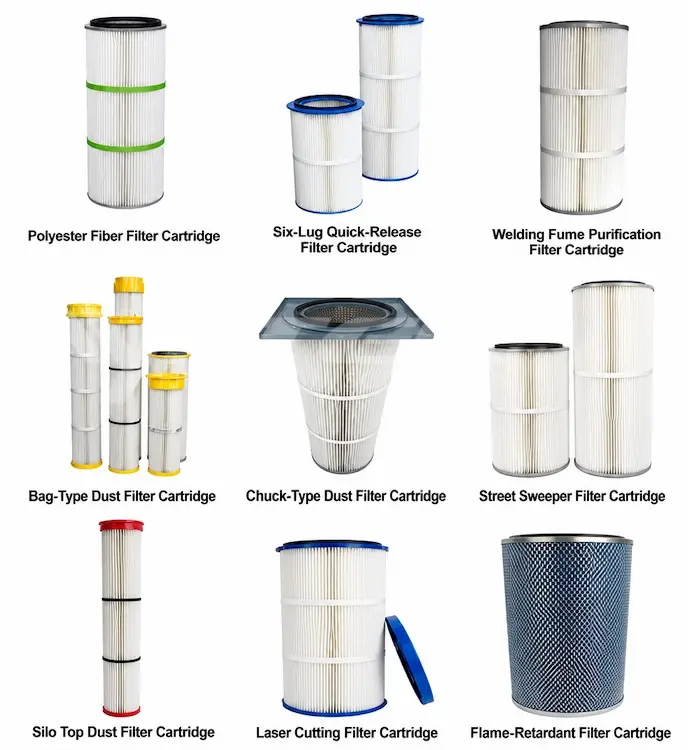
Polyester fiber (nonwoven)
General-purpose and cost-effective, suitable for normal-temperature operating conditions.
PTFE membrane-coated media
Smooth surface allows easy dust release, with high filtration precision.
Antistatic media
Used in applications involving flammable or explosive dust.
High-temperature media (e.g. fiberglass, aramid)
Used for high-temperature flue gas conditions.
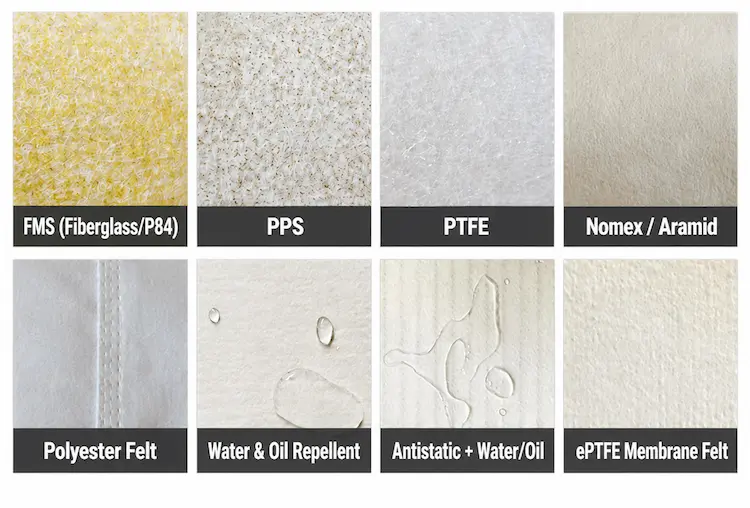
FMS needled felt
PPS (polyphenylene sulfide) needled felt
PTFE (polytetrafluoroethylene) needled felt
Metamax (meta-aramid) needled felt
Polyester needled felt
Water- and oil-repellent needled felt (WR/OR)
PTFE membrane-coated needled felt
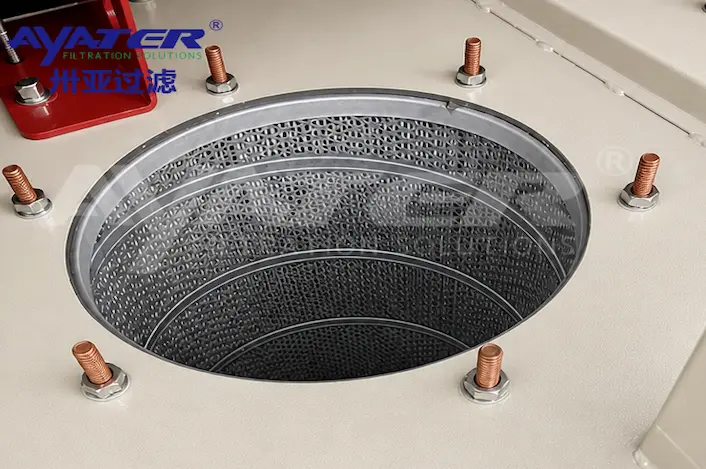
Bolted top-cover mounting
The cartridge is held in place by a top cover fastened with screws. The cover presses the cartridge against the sealing seat, so replacement requires removing and refitting the cover screws.
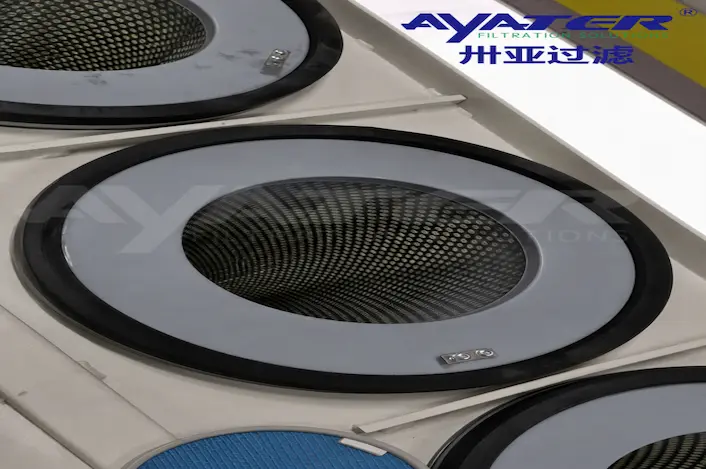
Flange end-cap mounting
The cartridge is supplied with a flanged end cap that is bolted to the tube sheet or mounting plate. The flange both locates the element and compresses the gasket for a reliable seal.
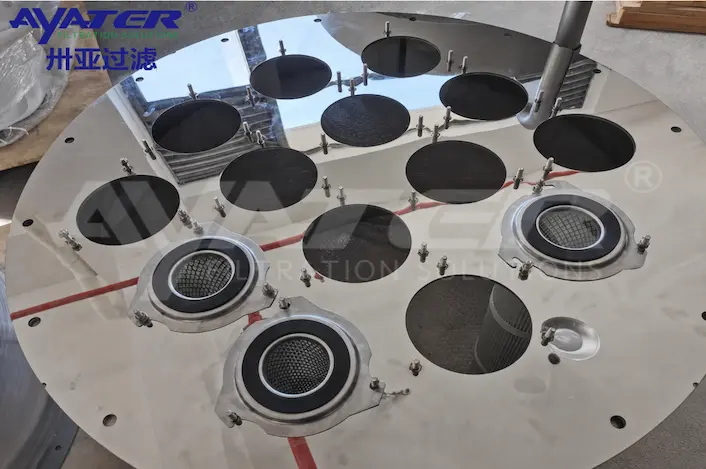
Threaded-rod (draw-rod) connection
A threaded rod passes through the cartridge and tightens the end cap against the sealing seat with a nut; a common arrangement for cartridges loaded from the bottom.
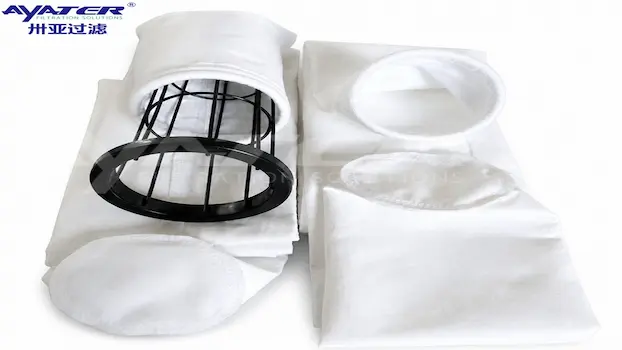
Cage-supported bags
In many pulse-jet systems, a metal cage is inserted inside the filter bag to support the fabric during operation and cleaning.
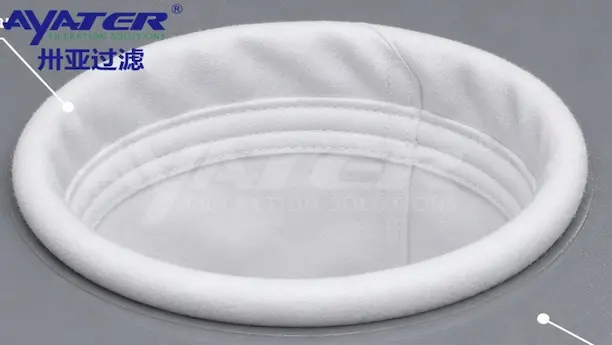
Snap-band or ring-mounted bags
A shaped ring or snap band secures the bag opening to the tube-sheet opening. Correct seating is necessary to prevent bypass leakage.
In practice, selecting between dust collection technologies is straightforward: cartridge collectors are the practical choice for fine, dry dust, moderate temperatures, and tight installation spaces, whereas fabric baghouses are better suited for large air volumes, high-temperature gas streams, and abrasive, moist, or heavy dust loads.
Q: Are dust collector cartridges and filter bags interchangeable?
A: Not automatically. They use different geometries and may require different mounting interfaces, filtration areas, airflow conditions, and cleaning parameters. A conversion requires engineering verification of the complete collector system.
Q: Which is more suitable for fine dust?
A: Both cartridges and filter bags can collect fine particles when correctly designed and operated. The result depends on the media, surface treatment, filtration velocity, dust properties, cleaning cycle, and required outlet concentration.
Q: Which filter medium should I choose for high-temperature dust?
A: The choice depends on continuous and peak temperatures, gas chemistry, humidity, and mechanical requirements. Specialized bag fabrics or cartridge media may be available, but the allowable service conditions must be confirmed for the complete element.
Q: Can cartridge filters handle abrasive dust?
A: Some cartridge systems can handle selected abrasive dusts, but particle impact, inlet velocity, dust concentration, and media protection must be evaluated. A baghouse or another collector design may be more appropriate for certain abrasive processes.

Choosing between a dust collector cartridge and a filter bag starts with the operating conditions and the existing collector design. A suitable selection should address filtration requirements, media compatibility, installation dimensions, cleaning method, and maintenance considerations.
AYATER supplies industrial filtration products, including replacement dust filter cartridges and other filtration elements for industrial applications. If your plant requires replacement cartridges or filter bags, contact AYATER with the existing filter model, dimensions, operating conditions, and application details to discuss a suitable filtration option.
←No Information


