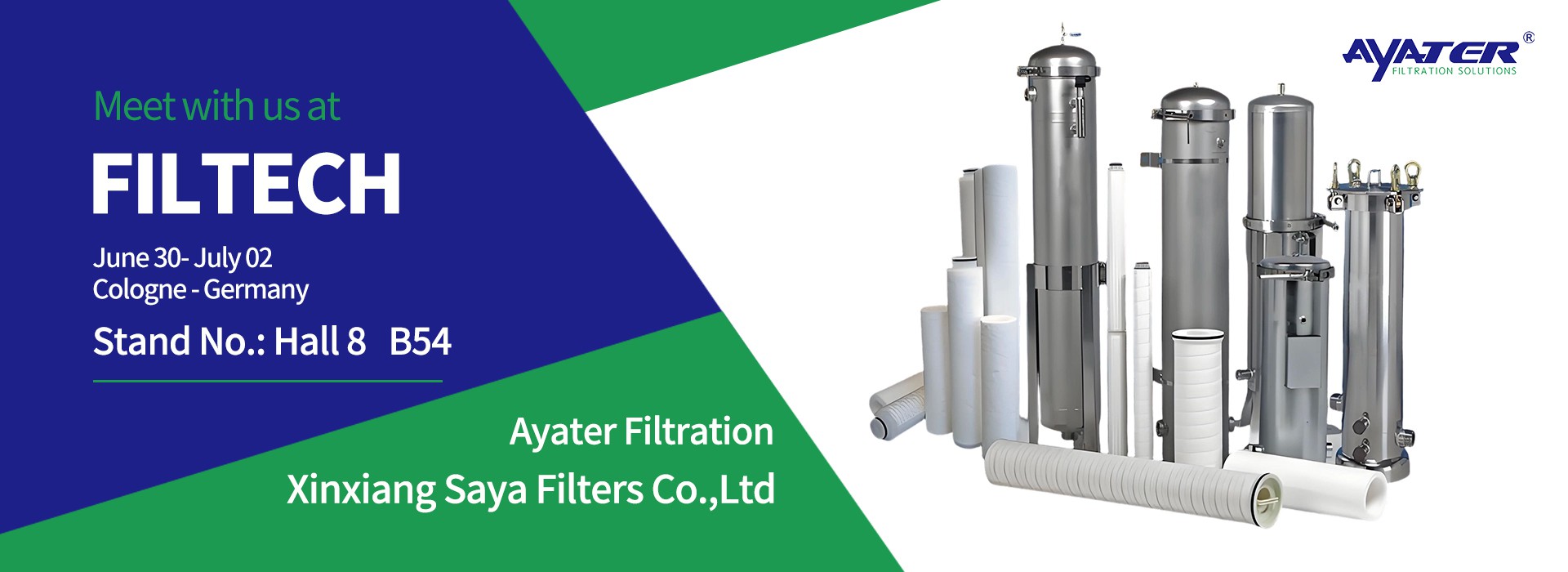

A Stainless Steel Filter Element is an industrial filtration component that uses stainless steel media to retain particulate contaminants. Unlike filter elements primarily based on fibrous layers, metal elements can use woven wire mesh, sintered metal mesh, sintered powder, or pleated metal media to create different filtration structures.
The media structure influences how particles are retained, how contaminants accumulate, and how the element can be cleaned. For this reason, selecting a Stainless Steel Filter Element involves more than checking the filtration rating.
The filtration mechanism of a stainless steel element is largely determined by its pore structure.
With woven wire mesh, particles are mainly retained at the surface or openings of the metal mesh, making it a typical surface-filtration structure.
With sintered metal media, interconnected pores are formed by bonded metal particles or mesh layers. Particles can be retained at the media surface and within the internal pore structure.
Pleated metal media increases the available filtration area by folding the media, allowing a larger effective filter area within a defined element size.
Therefore, stainless steel elements made from different media structures can have different filtration behavior even when they use the same stainless steel grade.
A key characteristic of sintered filter media is the integrated porous metal structure created during the sintering process. Compared with media that relies mainly on the arrangement of individual fibers, sintered media contains a defined metallic framework and interconnected pores.
This structure helps maintain relatively stable filtration passages during normal operation and provides a rigid media base for suitable cleaning procedures.
Therefore, the value of a sintered filter element is not simply its stainless steel material, but the integrated porous structure created through sintering.
Sintering creates a relatively stable pore network that supports consistent filtration characteristics. The actual filtration rating should still be confirmed according to the specific media structure, manufacturing process, and test method.
Metal filter media can be cleaned by backwashing, back-pulsing, or other suitable methods depending on the construction and contaminant type. For surface-oriented filtration structures, cleaning can help remove accumulated particles and restore part of the filtration capacity.
Sintered metal media has an integrated metallic structure that can maintain its basic shape under normal operating conditions. This characteristic makes it suitable for equipment requiring a rigid filtration medium.
Selection should begin with the filtration task, rather than the material designation alone.
| Filtration Requirement | Structure to Consider | Main Factors |
| Surface particle retention | Woven Mesh | Mesh opening, particle size, contaminant loading |
| Controlled porous filtration | Sintered Metal | Pore structure, filtration rating, cleaning method |
| Larger filtration area | Pleated Metal | Effective area, flow rate, pressure drop |
| Repeated cleaning | Cleanable Metal Media |
Contaminant type, cleaning method, structural strength |
Filtration rating should not be treated as an isolated micron value.
Engineers should first identify the target particle size and contaminant characteristics, then consider flow rate, fluid viscosity, contaminant concentration, and allowable pressure drop when selecting the filter structure.
For example, two elements may both be identified as 10 μm, while one uses woven mesh and the other uses a sintered porous structure. Their actual filtration behavior may differ.
For this reason, purchasing a Stainless Steel Filter Element should involve confirming both the filtration rating and the media structure or test conditions used to establish that rating.
Stainless steel elements can be evaluated according to the filtration task rather than only by industry:
This task-based approach can be more useful for engineering procurement because different filtration requirements may exist within the same indus
After determining the required filter structure, engineers should confirm:
Process Fluid → Particle Type → Particle Size → Filtration Rating → Flow Rate → Pressure Drop → Temperature → Material → Element Dimensions → Connection
Media Structure is an important factor that is sometimes overlooked. Sintered, woven mesh, and pleated metal elements should not be considered interchangeable based only on dimensions or micron rating.
The key characteristic of a stainless steel filter element is not simply the stainless steel material, but the different filtration structures created by metallic media. Sintered elements use an integrated porous metal structure to provide defined filtration passages, along with mechanical stability and cleanability.
For engineering selection, the process should therefore start with the contaminant, filtration task, and media structure, followed by filtration rating, flow rate, pressure drop, and material selection rather than relying on micron rating alone.


