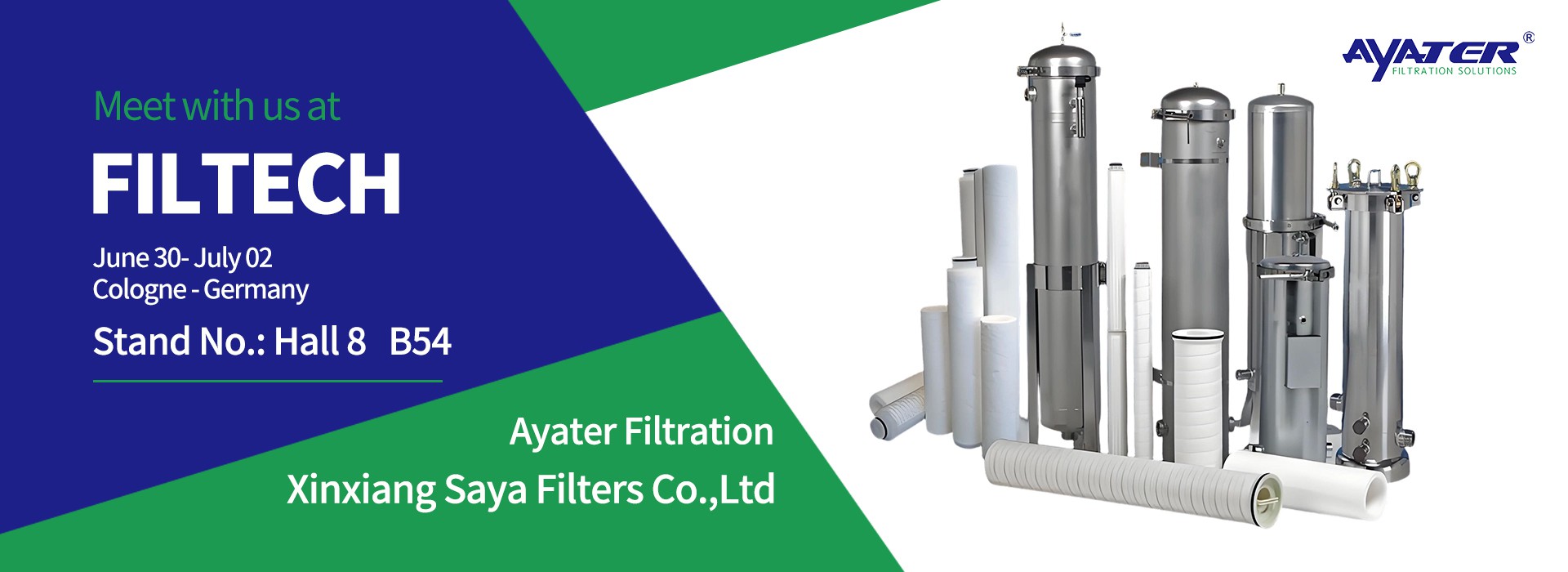

Coalescer Filter Cartridge is an industrial filtration component designed to remove dispersed liquid droplets and fine contaminants from gas or liquid streams through a coalescing separation process. It is commonly used in compressed air systems, gas filtration, fuel treatment, oil separation, and process industries where fluid purity and equipment protection are required.
A Coalescer Filter Cartridge is a specialized filter element that combines filtration and liquid separation functions. Unlike conventional particle filters that mainly capture solid contaminants, coalescing cartridges are designed to collect small liquid droplets and combine them into larger droplets that can be separated from the fluid flow.
During operation, contaminated fluid passes through multiple filtration layers. Fine droplets contact the coalescing media, gradually merge together, and move toward the drainage area under gravity or system flow conditions.

1. Contaminant Capture
The first filtration layer captures solid particles, dust, rust, and other suspended contaminants from the fluid stream.
2. Liquid Droplet Coalescence
The coalescing media provides a surface structure that allows small liquid droplets to combine into larger droplets. This process improves separation efficiency by increasing droplet size.
3. Separation and Drainage
After droplets become larger, they move through the separation section and are discharged from the system through gravity drainage or automatic drainage equipment.
A typical coalescer filter cartridge consists of several functional layers:
Filtration Layer
The filtration layer captures solid particles and protects downstream equipment from contamination.
Coalescing Media
The coalescing layer is usually made from materials such as fiberglass, polypropylene, or other engineered filter media. Its structure promotes contact between fine droplets and supports droplet growth.
Support Layer
The support layer maintains cartridge strength and helps prevent deformation under operating pressure.
Drainage Layer
The drainage section guides separated liquid away from the filtration area and supports continuous operation.
In compressed air applications, coalescer cartridges are used to remove oil aerosols, water droplets, and fine contaminants from compressed air before sensitive equipment.
Typical applications include:
Oil and Gas Industry
Coalescer cartridges are commonly used in gas processing and fuel treatment systems to separate liquid contaminants from gas streams or liquid fuels.
Chemical and Process Industries
Industrial process systems often require liquid separation to maintain process stability and protect downstream components.
Selecting a coalescer cartridge requires consideration of operating conditions and system requirements.
1. Filtration Media Compatibility
The filter material should be compatible with the processed fluid, including chemical properties, temperature range, and operating environment.
2. Flow Rate Requirements
The cartridge size and filtration area should match the required flow rate to maintain stable pressure drop during operation.
3. Operating Pressure
The cartridge structure should be suitable for the system pressure to ensure reliable mechanical performance.
4. Contaminant Characteristics
Different applications involve different types of contaminants, such as oil mist, water droplets, or solid particles. Filter selection should consider contaminant type and concentration.
| Feature | Coalescer Filter Cartridge | Standard Filter Cartridge |
|---|---|---|
| Main Function | Liquid droplet separation and particle removal | Particle filtration |
| Separation Mechanism | Coalescence and drainage | Surface or depth filtration |
| Target Contaminants | Oil mist, water droplets, fine particles | Solid particles |
| Typical Applications | Gas-liquid separation, compressed air, fuel systems | Water treatment, hydraulic systems |
Regular inspection and replacement help maintain filtration performance and protect downstream equipment.
Maintenance factors include:
Coalescer Filter Cartridge provides a practical solution for separating liquid droplets and contaminants from industrial fluid systems. Understanding the working principle, structure design, application conditions, and selection requirements helps engineers choose suitable filtration solutions for different industrial processes.


