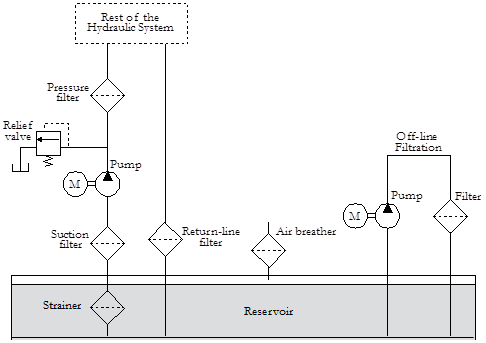
Hydraulic oil filters are categorized by their installation position in hydraulic systems, each serving a unique purification function. The most common types include hydraulic return line filter, pressure line filter, and suction line filter-among which return line filters are widely used in industrial systems due to their efficient contaminant removal capability.
Ayater's UR699 hydraulic return line filter and UT319 hydraulic pressure line filter are typical representatives of scenario-specific filters. The return line filter is installed in the oil return circuit, capturing contaminants generated during system operation before oil flows back to the reservoir; the pressure line filter is mounted in the high-pressure loop, protecting precision components from wear by filtering oil before it enters key valves and pumps.
For high-pressure systems (above 35MPa), high pressure hydraulic filter 38MPa (such as Ayater UT319) and 45MPa variants (Ayater UR699) are preferred, as they feature high-strength housings and pressure-resistant seals to avoid leakage under extreme pressure.
Filtration precision (measured in microns) directly affects hydraulic system reliability. Generally, precision requirements vary by system type: 2–5μm for high-precision equipment (e.g., CNC machines), 8–10μm for general industrial machinery, and 20μm for heavy-duty low-precision systems (e.g., construction machinery).
Ayater offers multi-precision options for its filter series, such as UT319 8μm hydraulic filter element for automation lines and UR699 2μm hydraulic filter element for offshore drilling platforms. Selecting the appropriate precision balances purification effect and flow resistance-overly high precision may cause excessive pressure drop, while insufficient precision fails to protect components.
It's worth noting that hydraulic oil filter 650L/min flow rate (matching Ayater UT319) is suitable for medium-flow systems, while 900L/min filters (Ayater UR699) are ideal for large-scale hydraulic power units (HPU) in steel mills and mining machinery.

Regular maintenance of hydraulic oil filters is crucial to extend their service life and ensure system stability. The core maintenance task is hydraulic filter element replacement, which should be performed based on differential pressure indicators and operating time.
Ayater's filters are designed with user-friendly maintenance features: the UT319 filter element replacement adopts a quick-release structure, allowing maintenance staff to complete replacements in 2 minutes without special tools; the UR699 filter element replacement features a high dirt-holding capacity (≥120g for 2μm elements), prolonging replacement cycles to 2,000 operating hours-35% longer than conventional filters.
Additional maintenance tips: Check the bypass valve function quarterly to ensure it opens normally when filter elements are clogged; replace hydraulic oil regularly (every 6–12 months) to reduce contaminant accumulation; clean the filter housing during element replacement to avoid residual contaminants affecting purification.
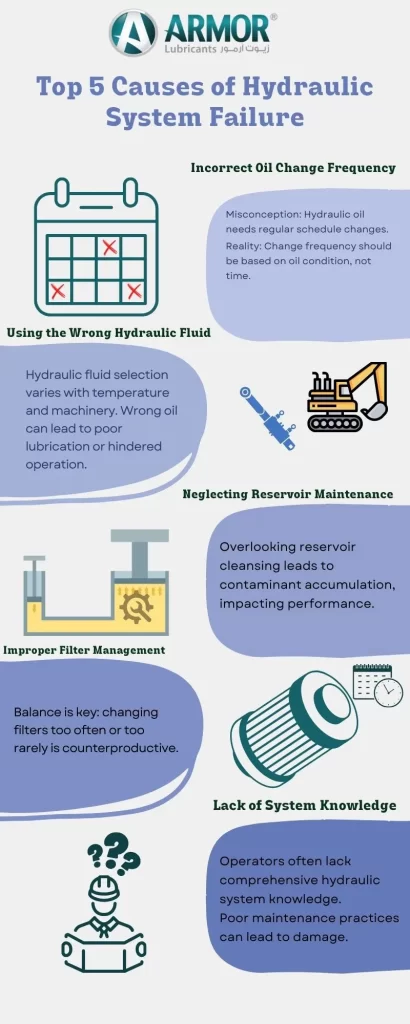
Many users have misunderstandings about hydraulic oil filter use, which may lead to premature filter failure or system damage. One common misconception is ignoring the compatibility between filter elements and hydraulic oil-using non-specialized elements for anti-wear hydraulic oil may cause seal swelling and oil leakage.
Another misconception is delaying element replacement to save costs. Clogged filter elements increase pressure drop, reduce system efficiency, and may cause the bypass valve to open, allowing unfiltered oil to circulate and accelerate component wear. Ayater recommends following the hydraulic filter routine maintenance schedule to avoid such issues.
As a professional filtration solutions provider, Ayater focuses on high-pressure hydraulic filter R&D, integrating advanced filter media and structural design into its products. Its Ayater UR319 hydraulic filter, UR699, and UT319 series feature forged/cast aluminum housings, ensuring corrosion resistance and impact resistance in harsh environments (e.g., mining, offshore).
Ayater's proprietary filter media enhances dirt-holding capacity and filtration efficiency, while the SAE thread connection hydraulic filter (UT319) and SAE flange connection variants (UR699) meet international installation standards, ensuring compatibility with global hydraulic systems.
In terms of after-sales support, Ayater provides hydraulic filter cross reference guide for its products, helping users quickly find replacement elements and achieve cross-brand compatibility, reducing maintenance costs and downtime.
With the advancement of industrial automation and intelligent manufacturing, hydraulic oil filters are developing towards intelligence, high efficiency, and long service life. Future filters will be equipped with intelligent differential pressure sensors and IoT modules, enabling real-time monitoring of filter status and automatic alerting for element replacement.
Ayater is actively layout intelligent filtration technology, planning to integrate electronic alarm functions into its high-pressure filter series (e.g., UR699, UT319) to help users achieve predictive maintenance and improve system operational efficiency. Meanwhile, the development of environmentally friendly filter media will reduce the environmental impact of discarded elements, aligning with global green manufacturing trends.
Selecting the right hydraulic oil filter, mastering scientific maintenance methods, and following industry application guidelines are key to ensuring hydraulic system stability and extending equipment lifespan. Ayater's high-pressure hydraulic filter series (UR319, UR699, UT319) combines professional design and reliable performance, providing customized filtration solutions for various industrial scenarios.
For more information on hydraulic filter selection and maintenance, or to inquire about Ayater's high pressure hydraulic filter series, contact our technical team for professional guidance.


Filtering contaminants is our business, but enriching lives is our mission. As Ayater continues to lead the filtration industry, we remain committed to a human-centric approach. We believe that by nurturing the hands that build our filters, we are building a more sustainable and reliable future for the global industrial community.


